
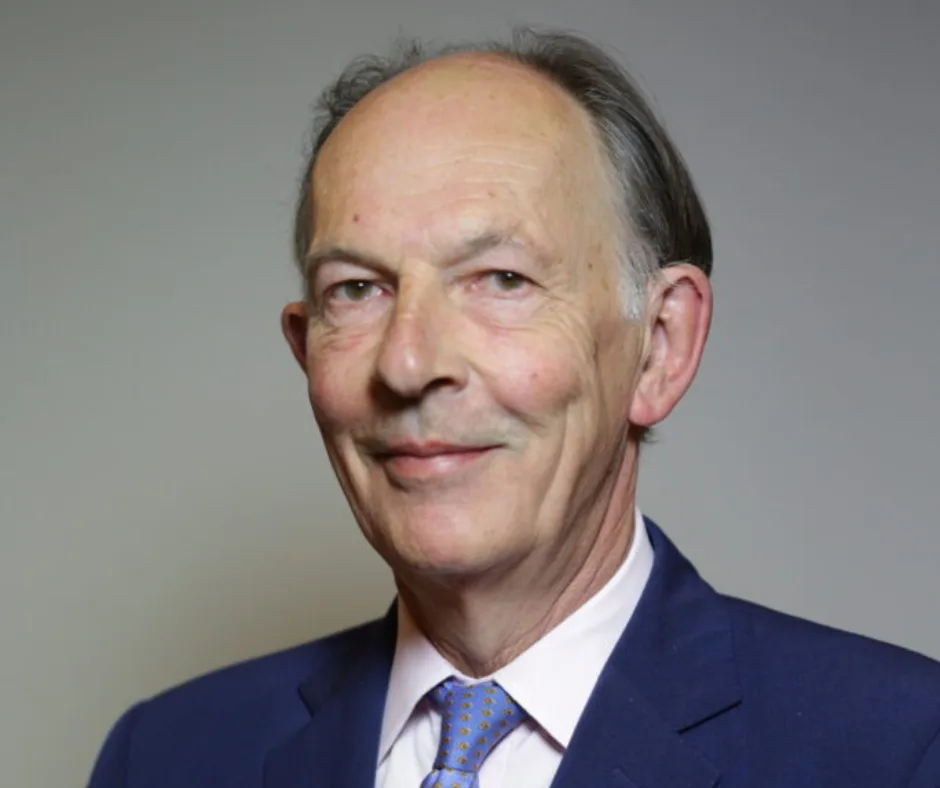
 Professor Jonathan Ramsay
I was very pleased to be invited to a new forum, the first meeting of its kind, which took place in London early in October. This meeting was devised by my colleagues Stuart Lavery, Ippokratis Sarris from King’s and Professor Sarah Martins da Silva from the Fertility Unit in Dundee.
It was a most unusual meeting because it brought together not only experts in the field but a very varied and diverse programme, including some unusual topics for fertility units.
I was very pleased to listen to Professor Jan Rosens, a real expert in the role of progesterone and implantation, and to my friend Ben Jones from the Lister about the use of platelet-rich plasma, both in ovarian function and for improving the endometrium. The evidence surrounding progesterone was extremely interesting because, to a urologist, it has always perplexed me that both high and low levels of progesterone can be equally detrimental to implantation.
Ben Jones, who talked about the evidence - such as it is - for the use of platelet-rich plasma, indicated that it may be of more benefit, at least evidentially, when applied to the ovary than to the uterus.
As many of you know, I have always been particularly interested in the microbiome and whether the vaginal microbiome accurately reflects what might be happening in the endometrium, and whether or not the microbiome itself may be disadvantageous to fertility overall. Although Dr Priscilla Day-Walsh did not speak about the male microbiome as we measure it in the seminal fluid or plasma, she was convincing about the possible role of various groups of organisms which may have an inflammatory potential, and thus may adversely influence the receptivity of the endometrium.
The rest of the day was equally interesting and was very innovative in terms of our understanding of all of the features that might be adding to our patients’ knowledge about their fertility status before they even come to us. Significant amongst these talks was from Dr Brooke van der Molen, who is a notable influencer and has recently published on many female issues touching on endometriosis and menopause. She gave a masterful talk about her views about social media, whether there was much fact, whether there was any filter to people’s views and therefore whether overall social media conversations about fertility were helpful, or in fact might even be a hindrance to our patients’ wellbeing and understanding. Overall, I think her conclusion was that conversations were always helpful, but of course social media is unfiltered and it can under certain circumstances cause far more anxiety and emotional disturbance than it might solve.
The second day was no less interesting than the first. I would pick out an excellent presentation from Dr Sylwia Milne, who gave a masterful presentation about the effects of the fertility industry on greenhouse gases. Of course, many of the even small pieces of equipment used in a fertility cycle are plastic-based and these require incineration, and if one looks worldwide at the fertility industry then, extraordinarily, the total CO₂ output equated to the carbon footprint of the fifth largest country worldwide. Whether the fertility unit can do much about this I think must depend upon resolution, rather than current practice. It is certainly the case that we could use less, reuse more and certainly incinerate less of the equipment currently used.
Later, we heard from Samantha Louden about her experience as a negotiator for law enforcement agencies, and how one therefore could deal with people who felt that their complaint was not being heard and therefore becomes an uncontrollable source of anger and frustration. In fact, there are similarities between patients who feel entirely let down and that their position is quite hopeless with a hostage or even a person about to, or threatening to, be suicidal. This gave great insight, I think, to the audience into just how awful a failed result may be and, although we would regard this as being far from a life or death situation, the parallels in terms of the anger that this can provoke are extremely cogent and compelling.
Finally, there was a debate about the role of DNA fragmentation. The motion of the debate was a pretty hard and steep mountain for me to cover, because it was entitled ‘Should everyone be tested?’ and that puts the threshold very high, but I think Sarah Martins da Silva and myself reached some sort of consensus where we would agree that there was validity to this testing, but only in certain clinical circumstances.
Overall, it was probably one of the most informative short conferences that I have recently attended and I think, quite simply, the fact that there was a urologist involved with notable speakers from the fertility world - almost exclusively gynaecologists - does indicate at least to me that the men, 50% of the problem, are beginning to be included in the fertility debate.
Finally, I do thank the organisers Stuart Lavery, Sarah Martins da Silva and Ippokratis Sarris for the invitation, and I hope that this new format continues annually.
So once again I wish all of you who are on their fertility journey every good fortune, and I think I can send an encouraging message that my senior colleagues, gynaecologists and infertility units are certainly now mindful of the contribution of the male factor to fertility.