The International Urology Society was founded nearly 50 years ago at a time when urology, as a specialty of surgery in general, was relatively new and when most urologists were trained as general surgeons.
In those days, there was no treatment for erectile dysfunction, there were no sperm retrieval operations (this had not been invented), and vasectomy reversal was just about gaining acceptance.
Interestingly, the only routine procedure related to fertility was the surgical treatment of varicocele and is it not extraordinary that it has taken 50 years for us to reinvent this very effective procedure.
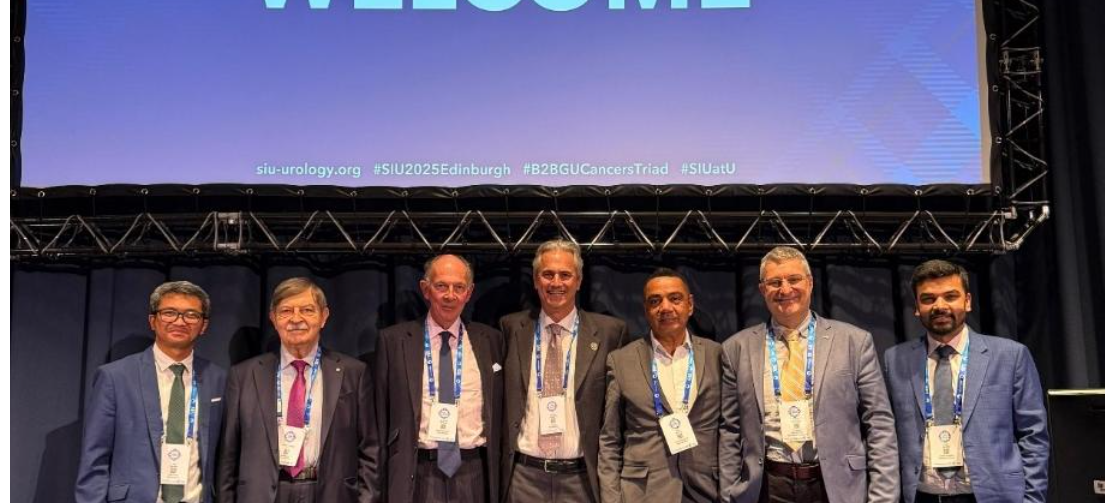
But things do change, and more prominence was accorded to most recent concepts applying to the origins of male fertility. I presented the current views on the environmental effects on testicular development and spermatogenesis, and Ravi Banthia explained the possible epigenetic consequences to disordered sperm production. Suks Minhas reviewed current knowledge about the microbiome as it might affect sperm quality. I was particularly pleased by this presentation, because the last academic interest I had at the Hammersmith Hospital was to encourage the Imperial researchers to look at this issue more scientifically. Suks and my friend Channa Jayasena are to be congratulated on carrying this forward. If ‘we are what we eat’, and if damaging our gut microbiome creates a chronic inflammatory state associated with many clinical conditions, then it is very likely that such changes also affect fertility.
Once again, my colleagues in the Global Andrology Forum are to be congratulated on reinvigorating an International Urology Society with new data specifically about male fertility which, as we know, is hard to come by, particularly in typical urological meetings.